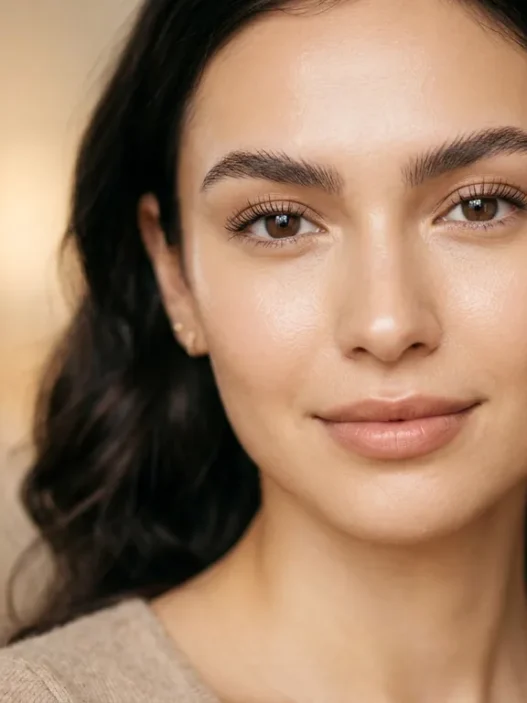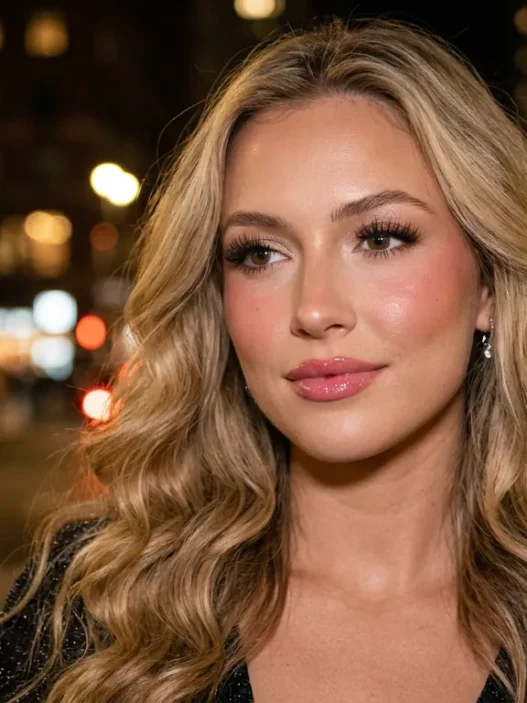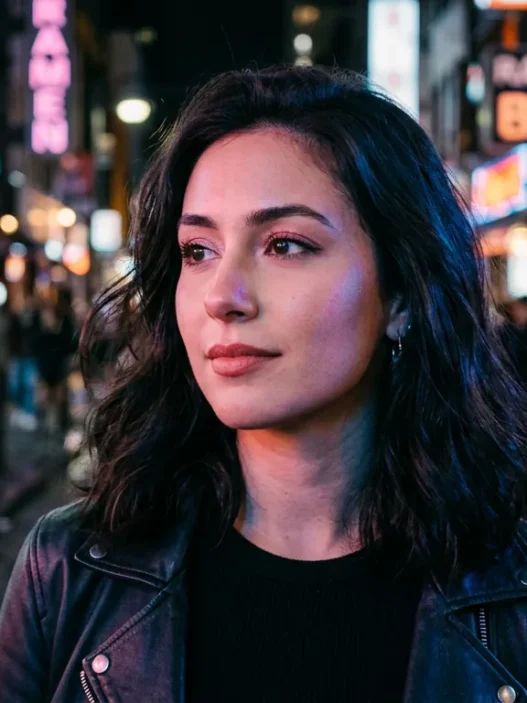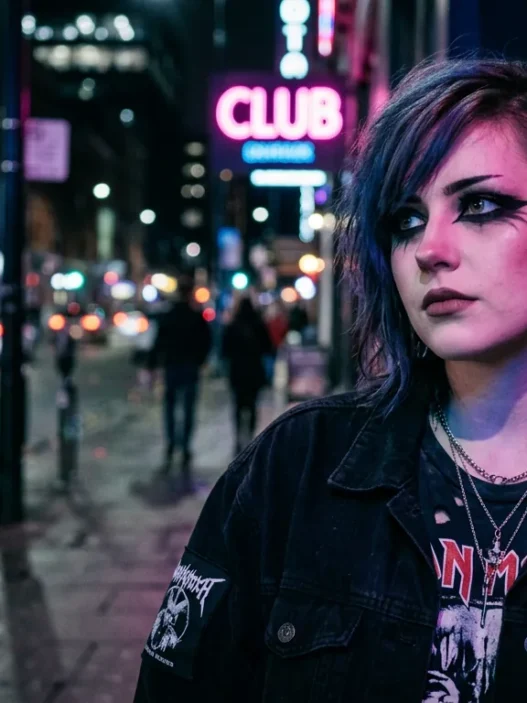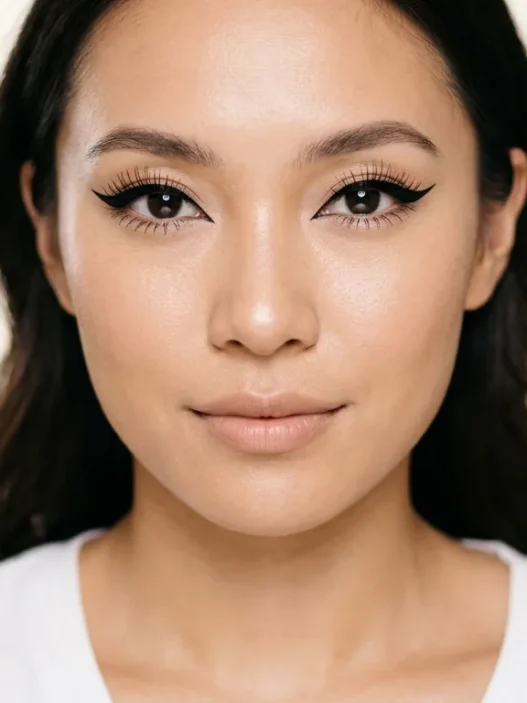




The first time I saw a gyaru makeup look — really saw it — I was sixteen, scrolling through scanned pages of a Japanese fashion magazine someone had uploaded to a forum. I remember thinking it looked like someone had taken every rule about “natural beauty” and lit them on fire. Giant lashes. Heavily lined lower lids. Skin that glowed almost aggressively. I was obsessed immediately, the way you get obsessed with something before you fully understand what it is.
That was a long time ago. And gyaru makeup has had one of the strangest, most fascinating journeys of any beauty subculture I’ve followed — from Japan’s Shibuya district to obscurity to a full-blown internet revival that’s still unfolding in 2026. It deserves a proper telling.
Through the Decades: What This Post Covers
The Way It Was
Gyaru — stylized as “gal” in Japanese — emerged in the 1990s as a full-blown youth rebellion. But the makeup was the beating heart of it. While the rest of Japanese beauty culture in that era leaned toward pale, minimal, almost porcelain aesthetics, gyaru went the exact opposite direction. Tanned or bronzed skin (achieved with self-tanner and sometimes actual tanning beds). Eyelashes so long and full they looked borrowed from a Disney character. White or silver liner on the inner corner and waterline to make eyes appear larger. Dark liner on the lower lash line, thick and smudged. Circle lenses to enlarge the iris. It was maximalism as identity.
There were substyles too — kogal, hime gyaru, ganguro, manba — each with their own specific makeup rules. Ganguro pushed the tan to near-theatrical extremes with white lips and eye shadow stacked against very dark skin. Hime gyaru softened things with pink tones and delicate rhinestone details. The point is, there was a whole internal grammar to this look. It wasn’t random excess. It was a language.
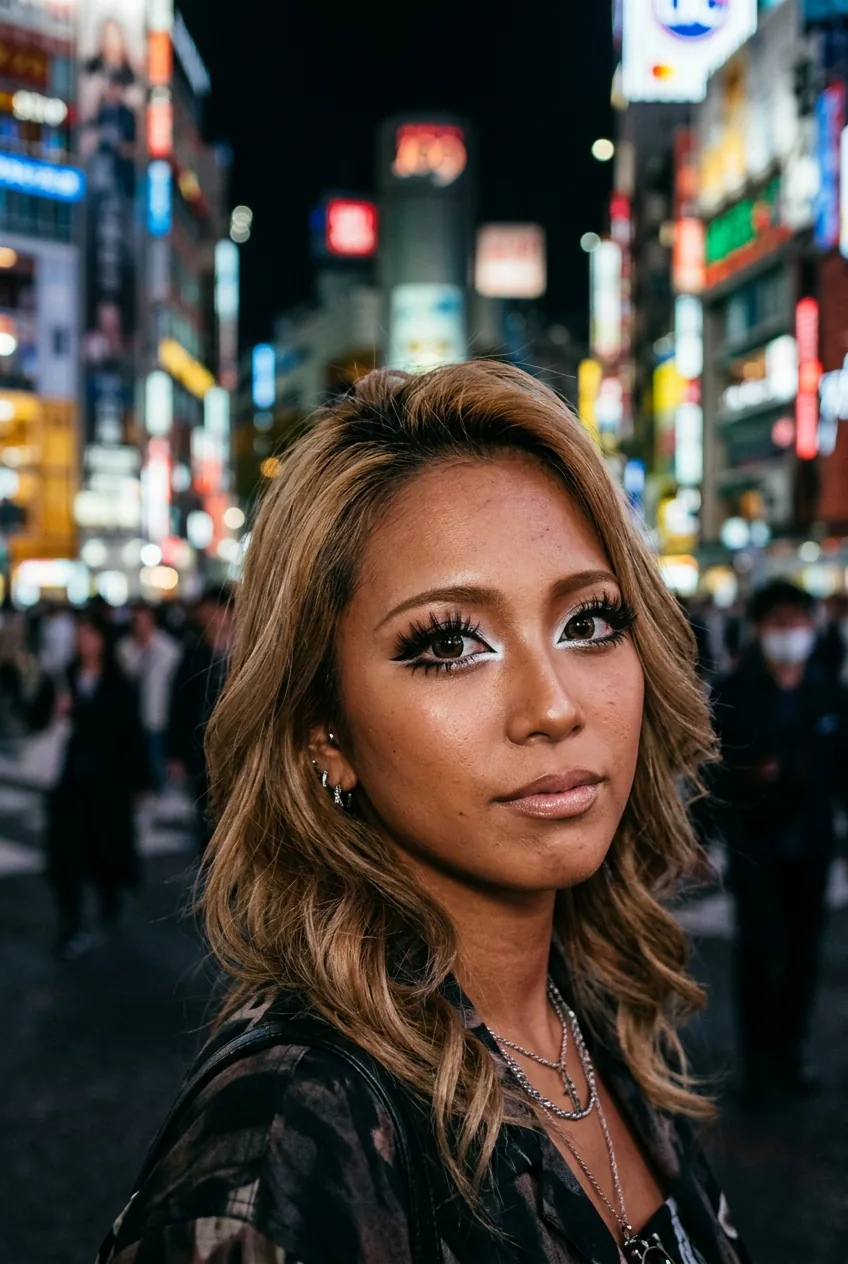
What I find so moving about the original gyaru era is that it was genuinely countercultural. These young women were rejecting beauty standards that had been handed to them — the quiet, the modest, the self-effacing. They were loud, on purpose. There’s something worth understanding about that original defiance if you want to appreciate why the style mattered so much beyond just the aesthetics.
A Video That Takes You Back to Shibuya
What Changed and Why
By the early 2010s, gyaru was in serious decline in Japan. Not a gentle fade — more like a sudden cultural exhale. The magazines shut down. The Shibuya shops closed. The style started feeling less like rebellion and more like costume, at least to mainstream audiences. Why?
A few things happened more or less simultaneously. Social media shifted the beauty ideal toward something that read as “effortless” — the no-makeup makeup look, the glass skin obsession, the idea that good skin was the flex rather than what you put on top of it. Instagram aesthetics in the mid-2010s were all about muted tones and barely-there everything. Gyaru’s dramatic, decorative maximalism simply did not photograph well under that cultural filter — metaphorically or literally.
There’s also the uncomfortable reality that some corners of gyaru — particularly ganguro — got flattened into mockery by Western media rather than understood as cultural commentary. That misrepresentation hurt the style’s global reach in a way it still hasn’t entirely recovered from.
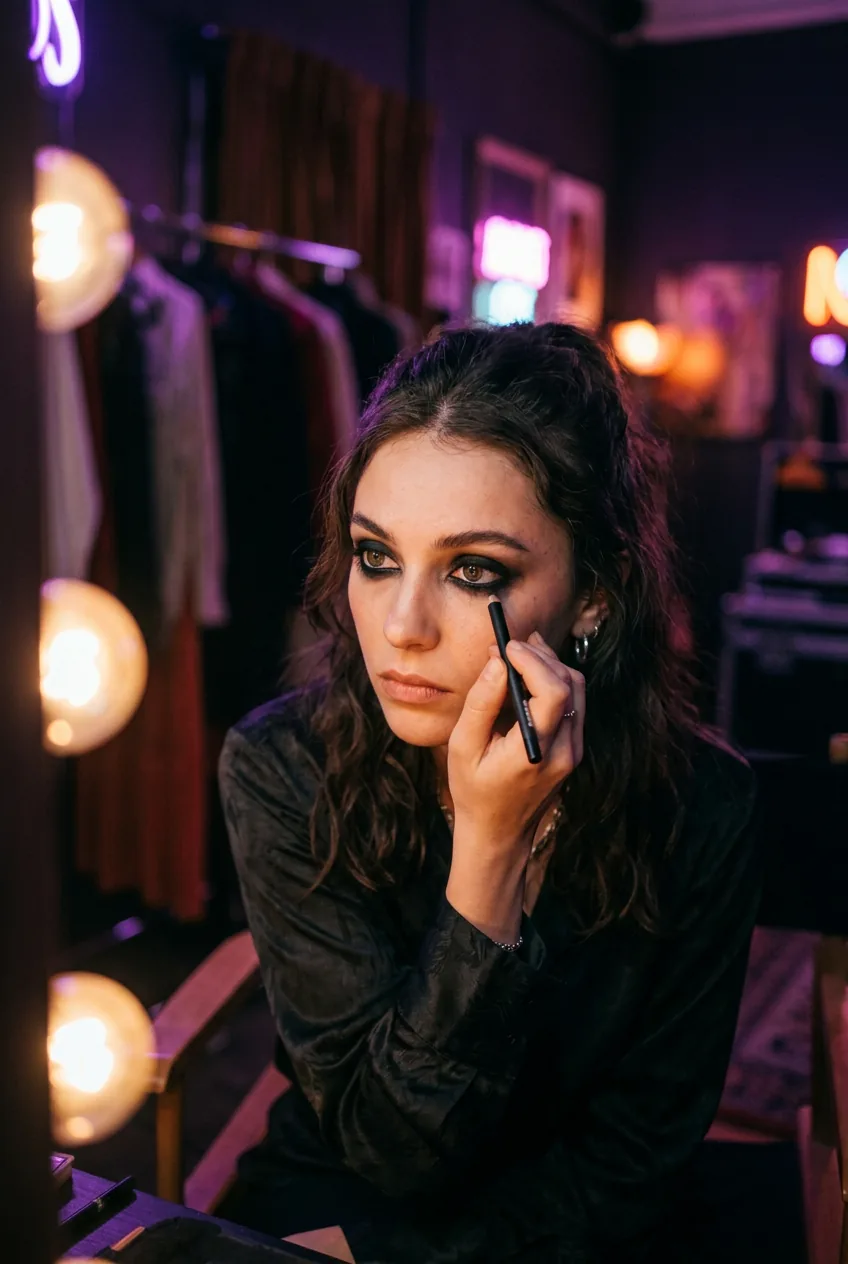
And then something shifted again, slowly, around 2020–2022. The goth makeup moment we’re all living through is part of the same larger reclamation — a collective realization that dramatic, subculture-coded makeup is interesting and worth taking seriously. Alt aesthetics started getting their due. And gyaru was waiting.
What We’ve Gained
Here’s what the revival has genuinely improved. The modern gyaru-inspired look — and I’ll call it “gyaru-influenced” rather than pure gyaru because it’s often a remix — is more inclusive in its approach to skin tone. The original tan-centric looks, beautiful as they were, created some messy territory around race and brown skin as aesthetic rather than identity. The 2026 version of this trend has, largely, moved toward celebrating the technique rather than a specific skin color as the goal.
We’ve also gained access. The products that now exist to recreate these looks are genuinely better. Lower lash liner used to require actual talent to smudge perfectly; now there are felt-tip formulas that do the job for you. Circle lenses are more comfortable. False lashes are lighter. The technical barrier has dropped considerably.
I also think the internet has allowed gyaru’s internal complexity to survive in a way that wouldn’t have been possible otherwise. Dedicated communities — on Discord, on Tumblr, still on certain corners of TikTok — are preserving the substyle distinctions with almost archival care. You can learn the difference between manba and banba now. That knowledge was nearly lost and now it isn’t.
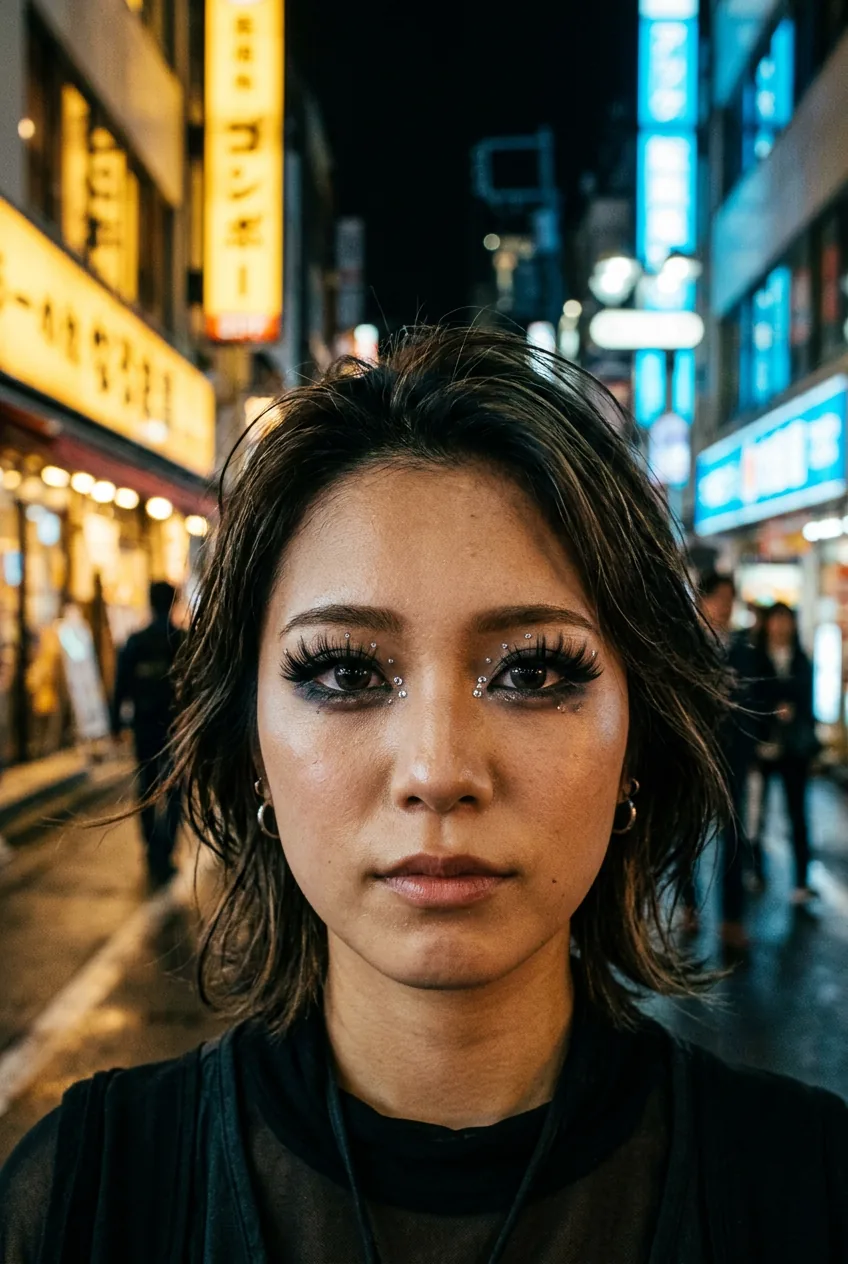
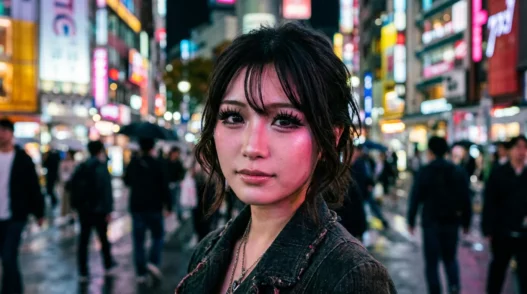
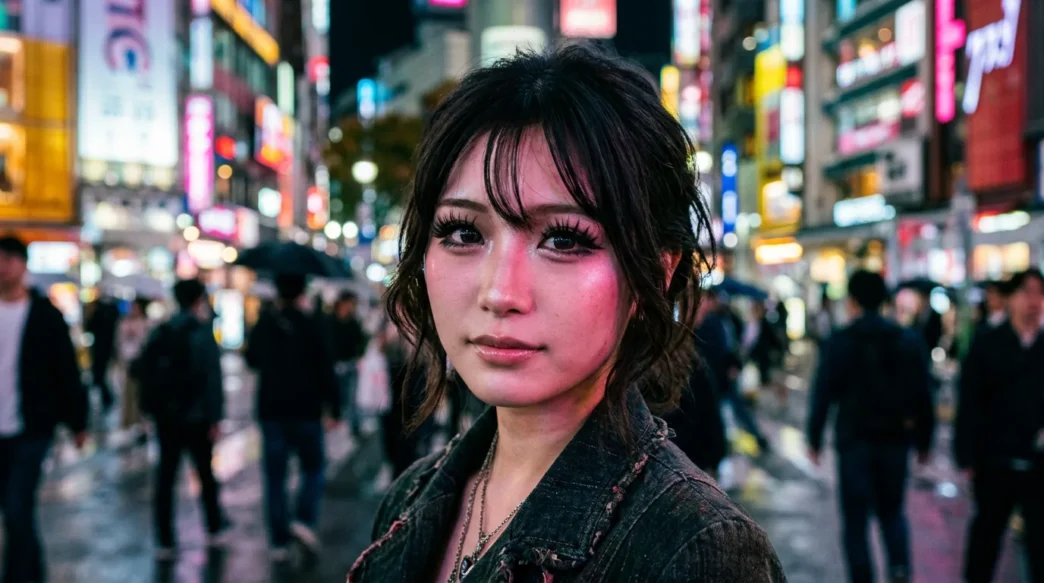
The overlaps with other alt aesthetics have been genuinely interesting too. The way gyaru-influenced eyes — that dramatic lower liner, the doe-eye enlarging techniques — intersect with the current wave of alt makeup looks the internet loves to argue about has created some genuinely creative hybrid territory. Look at how she’s wearing the lower liner in the photo above — diffused, a little smoky, but unmistakably gyaru in its intent. That’s the modern translation right there.
What We Quietly Lost
Okay. Here’s my slightly controversial take, said with full affection for the people keeping gyaru alive right now: I think we lost the attitude. And I don’t mean that in a gatekeeping way — I genuinely mean it as something worth grieving.
Original gyaru wasn’t just a set of products applied to a face. It was a whole way of existing in public — loud, unapologetic, socially aggressive in the best sense. The girls doing Shibuya gyaru in 1997 were not trying to get compliments from strangers. They weren’t optimizing for algorithm reach. They were dressing for themselves and for each other, and they didn’t especially care what anyone else thought. That’s almost impossible to replicate now because everything exists within the validation loop of social media. Even the most committed gyaru creators on TikTok are still, on some level, posting for an audience.
I also miss the tactile community culture — the print magazines, the physical meet-ups in Shibuya, the way style evolved through in-person osmosis rather than through trend cycles. The style spread slowly and organically and that slowness gave it depth. You had to really want it to be part of it.
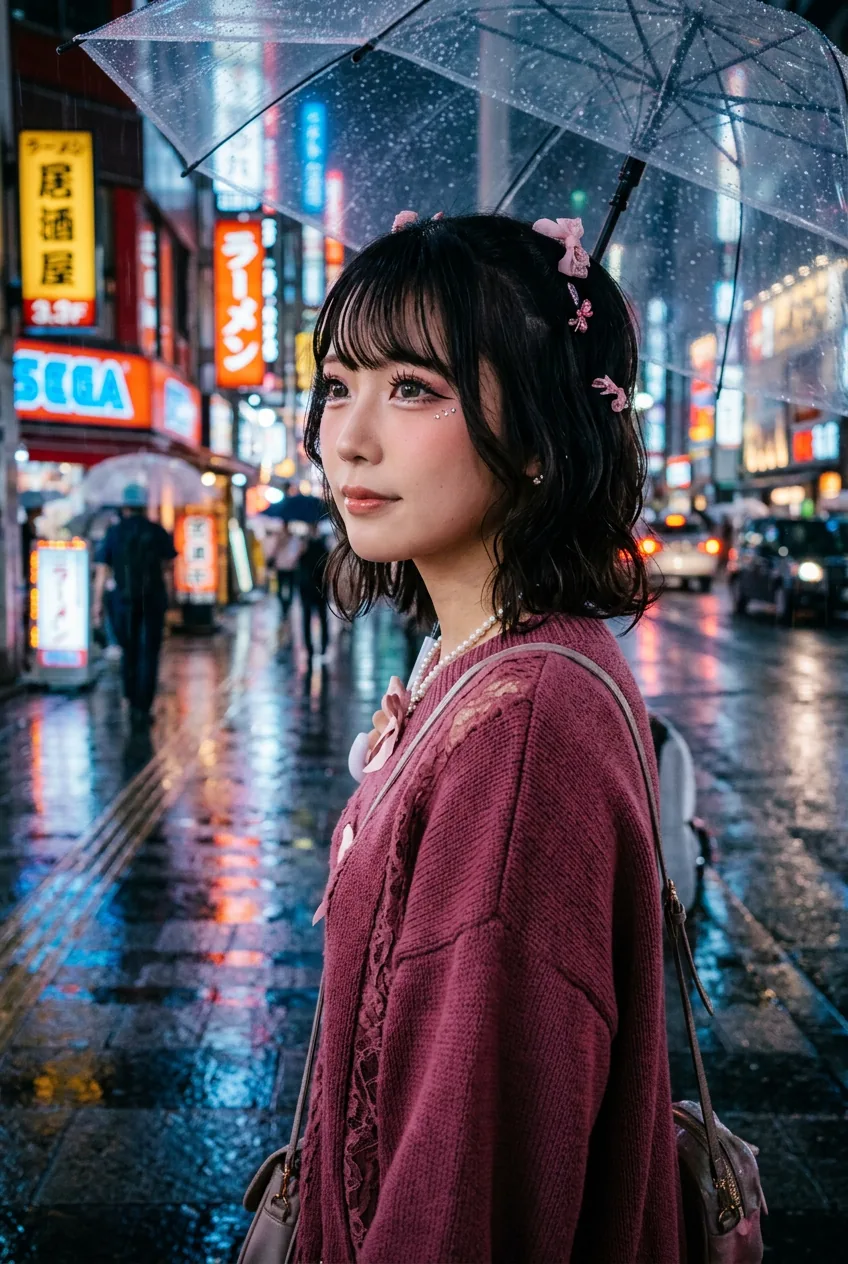
There’s something to be said for comparing this to how grunge makeup has suddenly resurfaced everywhere in 2026 — another subculture aesthetic that’s been aestheticized and separated from its original social context. The makeup survives. The meaning sometimes doesn’t. Both things can be true.
Where Gyaru Lives in 2026
Right now, gyaru makeup exists in a genuinely interesting in-between place. It’s not mainstream — you’re not going to see it on a department store beauty counter campaign — but it’s also not obscure anymore. It lives in the same exciting territory as gothic beauty favourites and other styles that feel too specific and committed to ever go fully mainstream, but too beloved to disappear.
What’s genuinely exciting in 2026 is the way individual elements of gyaru have been absorbed into broader beauty language without credit being given. That lower lash liner emphasis you’re seeing everywhere? Gyaru. The rhinestone inner corner detail that went everywhere two seasons ago? Hime gyaru, technically. The interest in circle lenses for dramatic eye looks has spiked noticeably this year. The fingerprints are everywhere, even when the name isn’t used.
I find this both flattering and a little frustrating. Flattering because it means the aesthetic has real staying power — the ideas work, they keep resurfacing because the techniques are genuinely effective at creating a specific kind of striking, large-eyed drama. Frustrating because attribution matters, culturally. Knowing where something comes from enriches your relationship with it.
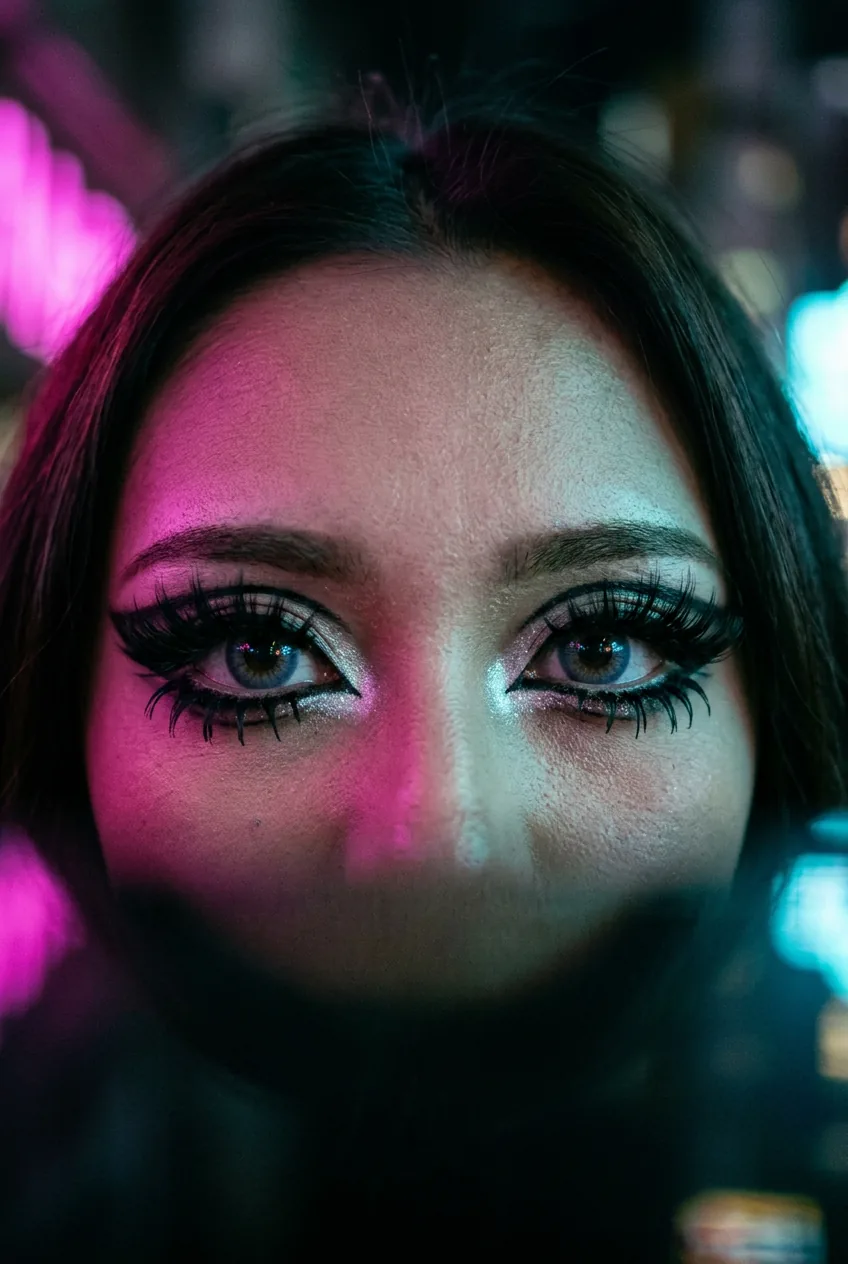
The communities actively practicing gyaru — as gyaru, named and intentional — are small but serious. They study the substyle rules like a craft. And honestly, there’s something really beautiful about that level of dedication to an aesthetic system. If you’re curious where to start, understanding beginner gyaru eye techniques is genuinely the best entry point — the eye makeup is the soul of the whole look. It intersects interestingly with broader monochrome makeup approaches when you lean into the bleached brow and single-tone lid that some hime gyaru looks favour.
Questions I Get About This
Is gyaru makeup actually wearable for everyday life in 2026?
Honestly, full traditional gyaru is a commitment — we’re talking 45 minutes minimum for a complete look. But gyaru-influenced elements absolutely translate to everyday wear. A smudged lower liner with big lashes, or just the inner corner brightening technique, reads as “editorial” in a modern context rather than “costume.” Start with one gyaru element and build from there.
Do I need circle lenses to “do gyaru” properly?
No — and this is important because circle lenses require proper fitting from an eye care professional if you’re new to contacts. The eye-enlarging effect can also be achieved through makeup technique alone: tight-lining the upper waterline, leaving the lower waterline bare, and the strategic white liner in the inner corner. Circle lenses enhance the effect but they’re not the foundation of it.
Is gyaru makeup appropriation if I’m not Japanese?
This is a question worth sitting with rather than dismissing. The gyaru community itself — including Japanese practitioners — has generally been welcoming of international fans who engage with the style respectfully and learn its history. The key word is “engage” — actually learning what the substyles are, understanding the cultural context, and not flattening it into a generic “Japanese aesthetic.” Do that work and participation feels very different from extraction.
What’s the single most important product for a gyaru-inspired look?
Lashes. Every time. A full, dramatic lash — upper and ideally lower individual lashes too — does more work than any other single element to communicate the gyaru aesthetic. Get the lashes right and everything else clicks into place around them. The eye is the whole point.
If this whole post has done anything, I hope it’s made gyaru makeup feel less like a costume and more like a conversation — one that started decades ago in Shibuya and is still very much ongoing. The look changed. The world around it changed more. But something essential survived: the insistence that a face can be a statement, not just a surface. That part, I think, will never go out of style.