



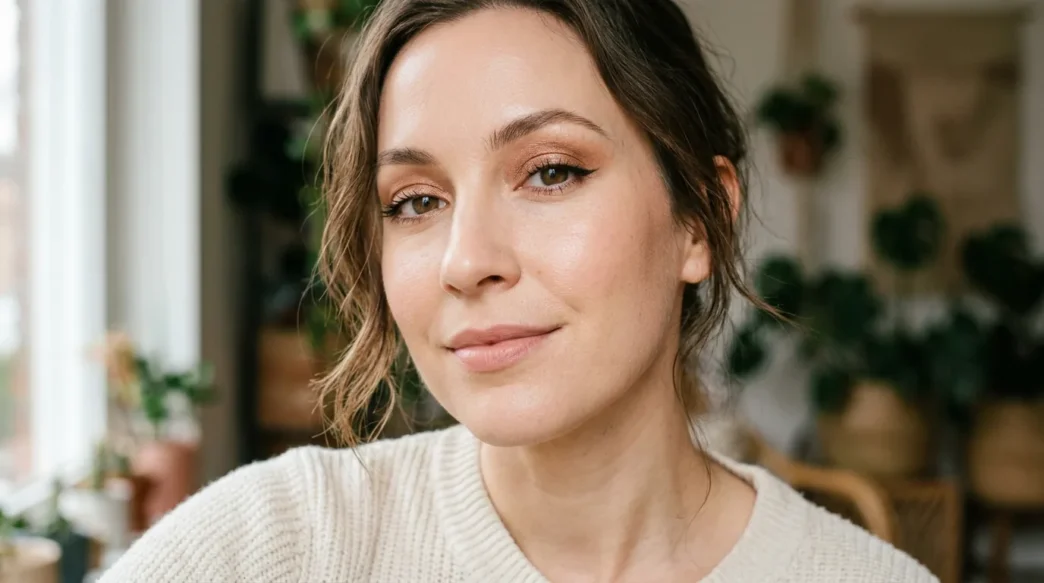
I spent my twenties convinced I just had difficult eyes. Liner would disappear by noon, shadow looked muddy no matter what brush I used, and hooded-eye tutorials made me feel like I was failing some basic test. Then a makeup artist friend watched me do my makeup for about thirty seconds and said, you are putting almond-eye makeup on a deep-set hooded eye. I had never really looked at my own eye shapes that way before.
That one sentence changed everything for me. Not because I ran out and bought new products, I used the exact same palette for months, but because I finally stopped copying placements that were never designed for my bone structure. Once I understood where my lid actually sits, where my crease folds, and how much mobile lid shows when I am looking straight ahead, the same three shadows suddenly looked intentional.
If you have ever felt like eye makeup just does not behave on you, this is the explainer I wish someone had handed me ten years ago. No face-chart jargon, no twelve-way quiz. Just how eyes are actually built, why certain looks fight you, and what to do instead.

What We Are Unpacking Together
The Short Answer
Here is my two-minute version. Your eye shape is mostly about three things: how much lid you can see with your eyes open and relaxed, which direction the outer corner points, and how your crease is built. Everything else is seasoning.
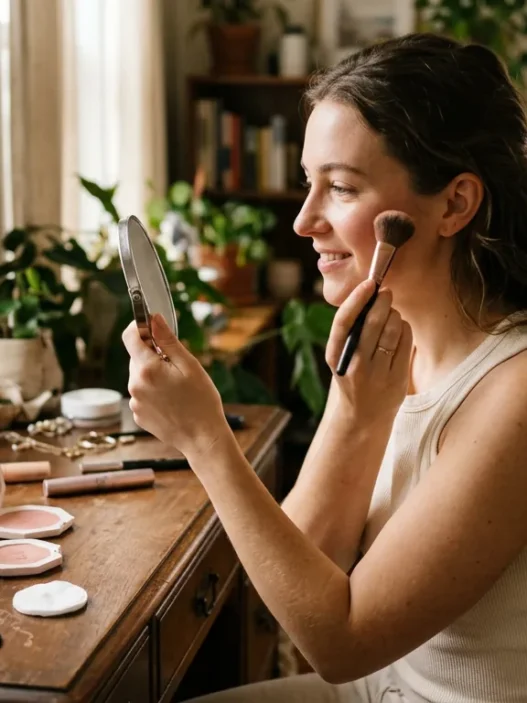
I love a quick mirror check for this. I look straight into a daylight window, keep my brows completely relaxed, and take a phone photo from arm’s length. Not a selfie from below, not a scrunched-up close-up. Just neutral. That photo tells me more than any quiz ever has, because quizzes ask how you feel about your eyes and the photo shows how light actually hits them.
In that neutral photo, I look for the basics first. Do I see a clear strip of mobile lid between lash and crease? That leans almond or round. Does skin from the brow bone sit right down on the lash line and hide the crease? That leans hooded. Does the outer corner lift a little toward the temple? That is what people mean by upturned. Does it sit level or dip just slightly? That reads as downturned or straight across, depending on the day and how tired I am.
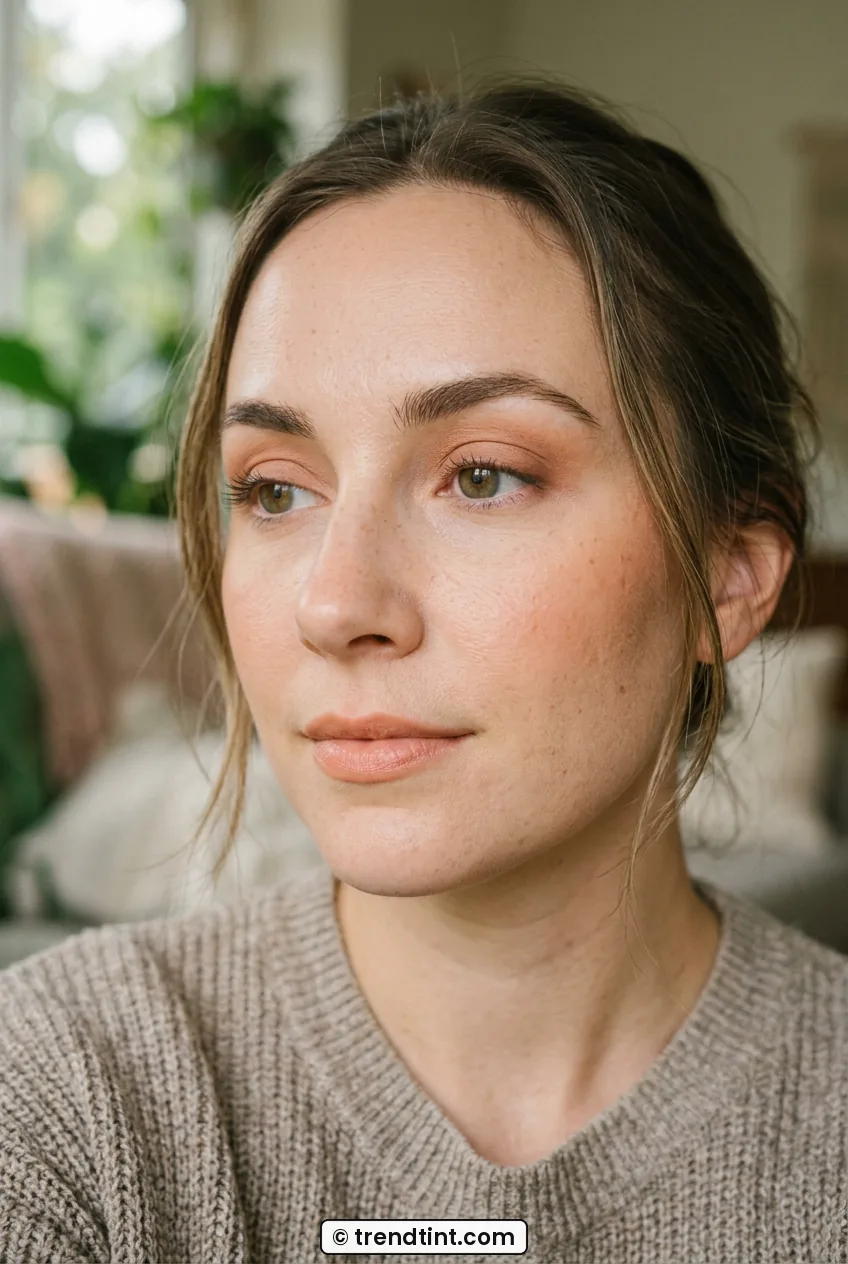
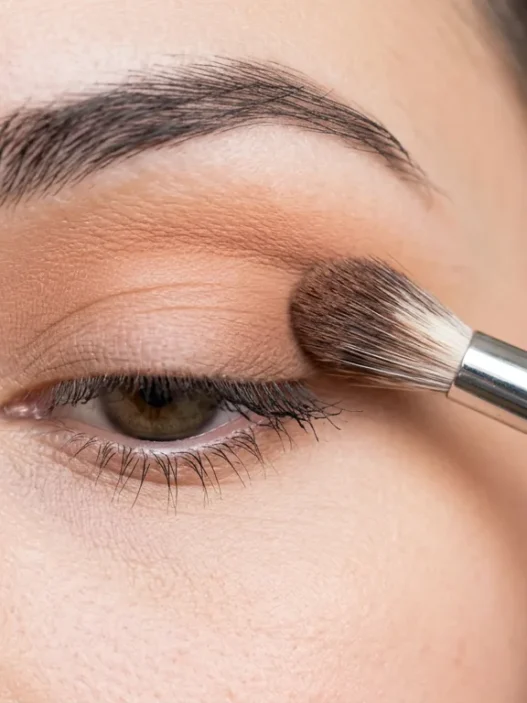
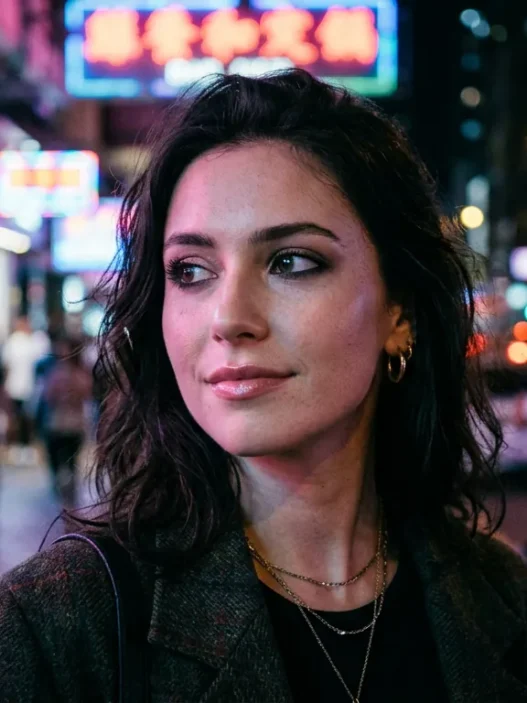
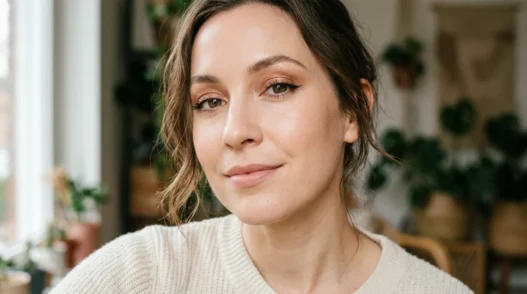
Look at how she is wearing hers in this photo, that soft wash of color that sits just above where her natural crease folds. That placement is exactly what I mean when I say follow the open eye, not the closed eye. With her eyes open you still see the shape, which is the whole point.
And can I share my slightly controversial opinion here? I think most of us do not have one pure eye shape. I am deep-set with a partial hood on my left eye that is heavier than my right, and my outer corners turn down just a touch when I smile. If I tried to force myself into one label I would get frustrated all over again. I use the labels as a starting language, then I adjust for what I actually see. If you have been exploring more eye makeup ideas and nothing quite matches, that mismatch is probably why.
I stopped asking what shape are my eyes and started asking what does my lid do when my eyes are open.
The other thing I had to unlearn was confusing eye color tricks with eye shape tricks. Making brown eyes pop with bronze or blue is a color-contrast thing. It works on any lid. Shaping tricks, where you place liner, how high you bring shadow, whether you tightline, those are architecture things. Once I separated color from structure in my head, shopping my own stash got so much easier.
How It Actually Works
This is the part nobody explained to me in a pretty way, so let me do it plainly. Your eye makeup sits on moving skin over a curved ball, tucked under a brow bone that casts a shadow. When your eyes are open, which is how the world sees you 95 percent of the time, only a small window of that skin is visible. Shape is just shorthand for describing that window.
Think of almond eyes as the balanced window. The whites taper at both corners, the iris touches top and bottom lids just slightly, and you can usually see a smooth, even strip of lid. Round eyes show more white around the iris, especially below, and the open lid looks more curved and wide. Hooded eyes have extra skin from the brow bone that folds over and covers part or all of the mobile lid, so the crease looks hidden when open. Monolids have no visible crease fold, just a flatter plane from lash to brow. Deep-set eyes sit further back under a more prominent brow bone, so there is a natural shadow in the socket. Prominent or protruding eyes sit a little more forward, with a larger-looking lid area.
Upturned versus downturned and close-set versus wide-set are extra descriptors, not separate species. I check upturn by imagining a straight line through the inner and outer corners. If the outer sits higher, upturned. Lower, downturned. For spacing, I was taught the one-eye-width trick and honestly it still helps. If you can just fit another eye between your two eyes, you are about average. Noticeably less, close-set. Noticeably more, wide-set. It is not exact science, but it tells you whether to focus depth on the inner third or stretch it outward.
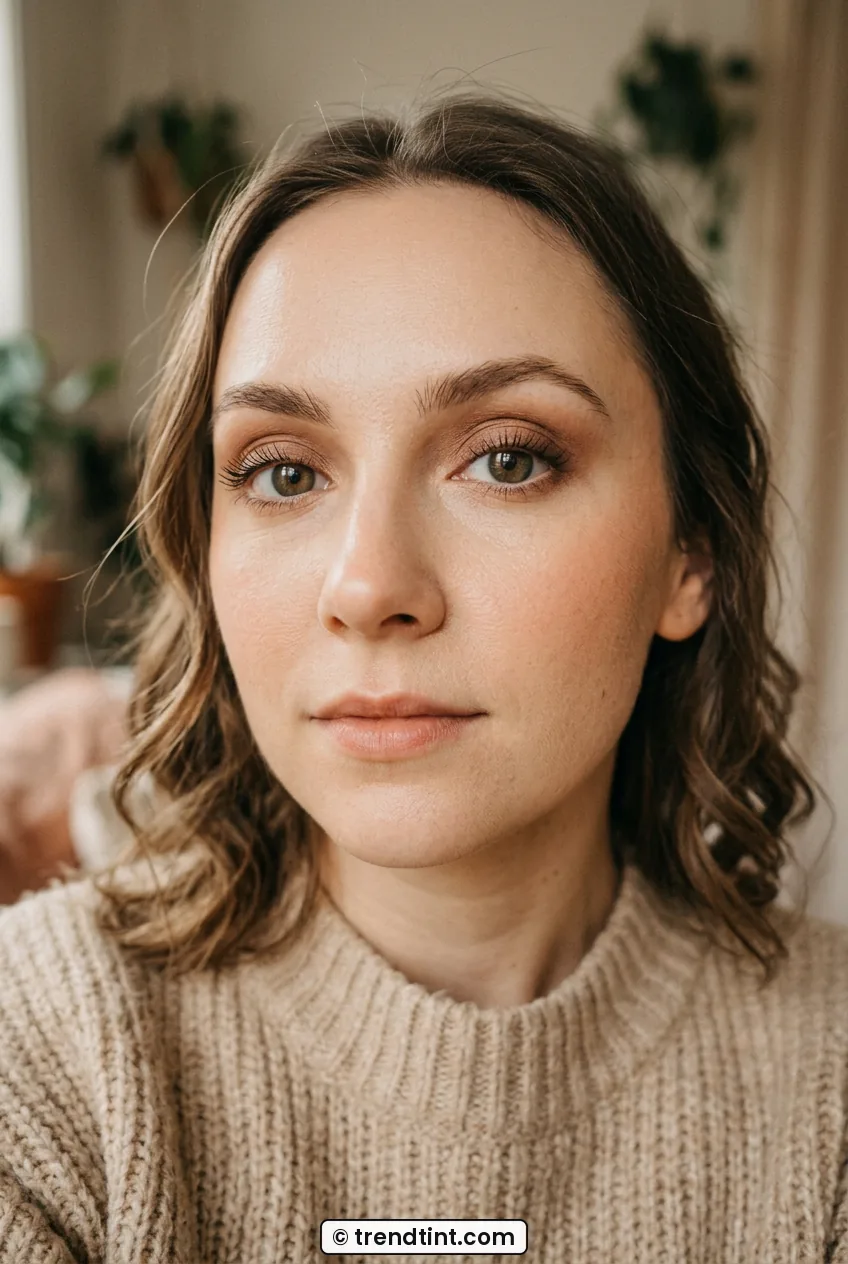
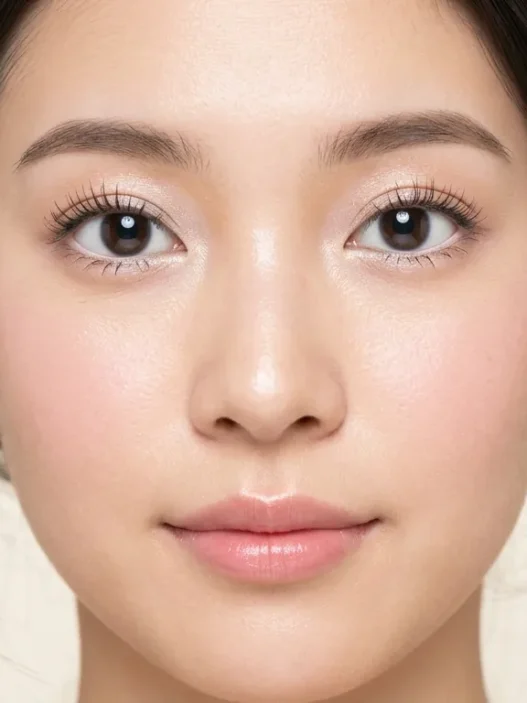
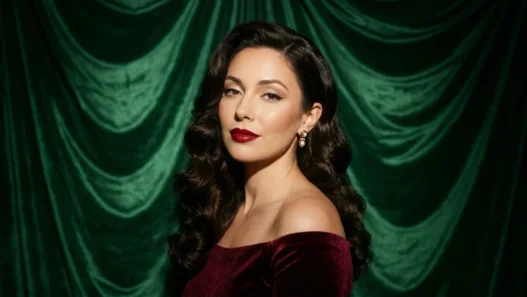
She has that more rounded, open lid I am talking about, see how much lid space shows from lash to crease even with a relaxed brow? On her, a wash of shadow actually stays visible. I love that for round eyes because you do not have to over-blend upward to be seen.
Where placement comes in is light and shadow logic. Anything light and a little luminous pushes forward. Anything matte and deeper pulls back. So when I want my deep-set eyes to look less shadowy, I keep the socket wash sheer and put the lightest touch right on the center of the mobile lid. When my friend with hooded lids wants her eyes to look bigger, she skips shimmer right on the fold where it would transfer, and instead places a soft matte transition shade slightly above her real crease, on the hood itself. It feels wrong the first time you do it with eyes closed, then you open your eyes and there it is.
Liner is the same physics. On an almond lid with visible space, a classic kitten flick has room to sit. On a hooded lid, that same flick gets swallowed by the fold unless you use what I learned about from reading on different eyeliner styles for hooded eyes before you commit to a spot, the trick where you draw with eyes open and let the line get a little straighter rather than swooping up. You can also read up on winged liner for hooded eyes while you practice, because watching the angle in motion helped me more than any diagram.
Mascara and lashes follow the same rule. A curl that lifts straight up opens a round eye beautifully. On my downturned outer corners, I concentrate length in the center and keep the outer lashes a little cleaner, otherwise everything drags down. Brows matter more than I expected too. A well-mapped brow lifts the whole window. I finally sat down with an in depth guide to eye makeup and realized my tails were drawn too low, which made my lids look heavier than they are.
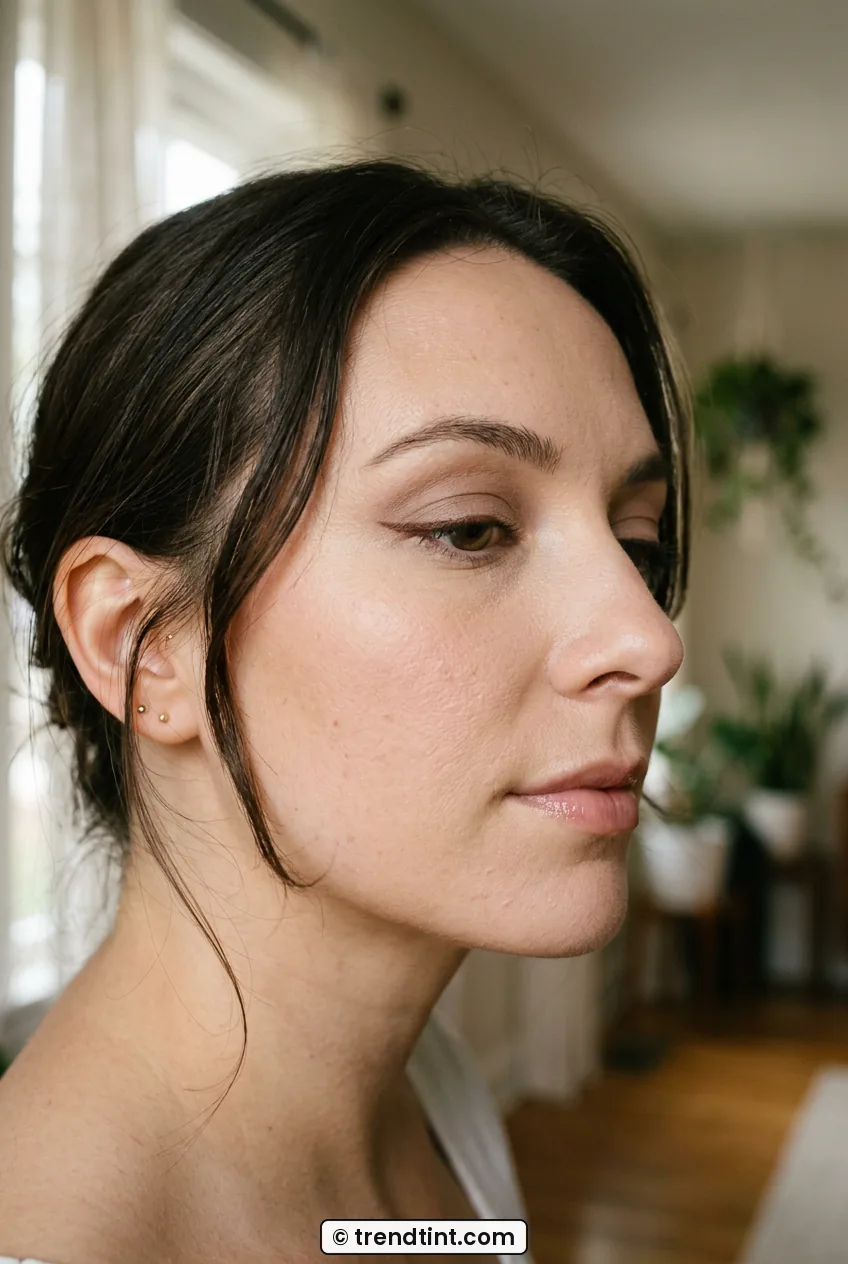
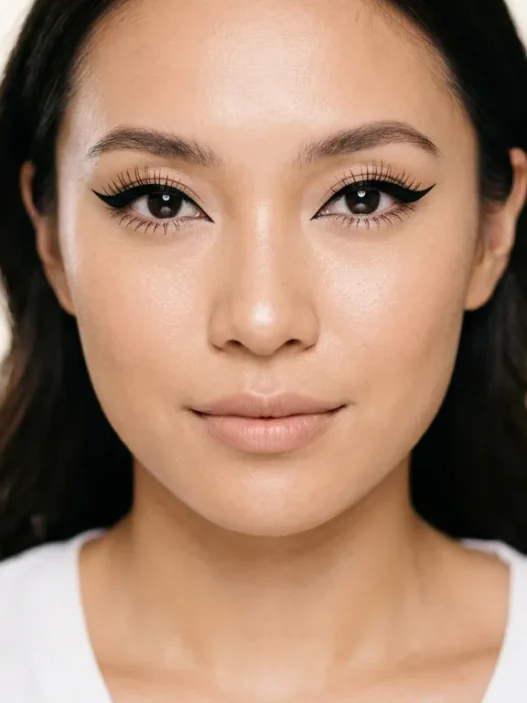
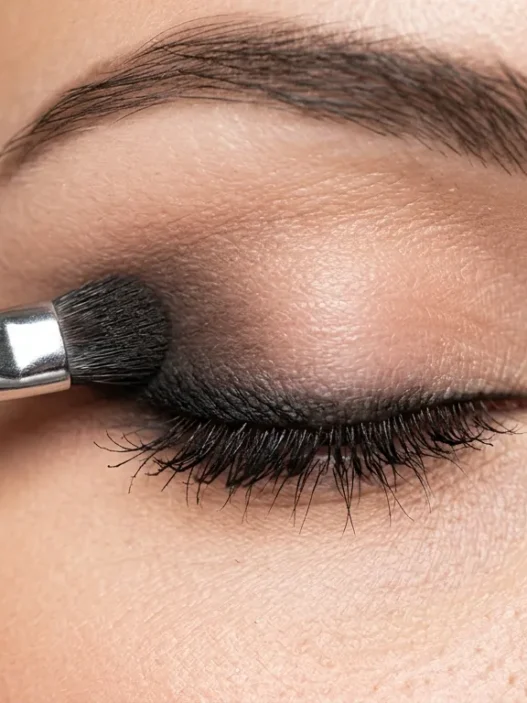
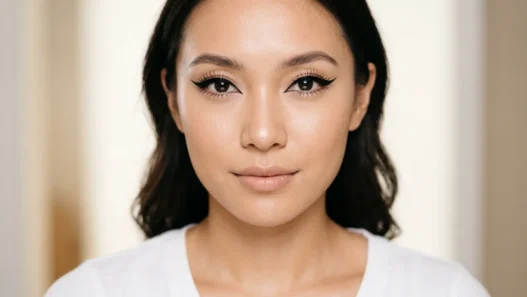
This close-up is such a good example of downturned balance. See how her liner stays thin through the outer third instead of getting thick and heavy? That one choice keeps the corner lifted. I copy that on tired days.
Why It Goes Wrong
Why does my eyeliner disappear when I open my eyes?
Because you probably drew it where you could see it with eyes closed, and then your fold ate it. This was my daily heartbreak. I would do a careful, even line, open my eyes, and poof. Half of it lived under skin. The fix that finally worked for me was drawing with eyes open and relaxed, dotting the shape I wanted to see, then closing just to connect the dots. It looks sketchy halfway through. Trust the open eye.
Why does eyeshadow look muddy on me in photos even when it looks fine in the mirror?
Two culprits I see over and over. First, you are layering too many deep shades into too small a visible area, especially on hooded or deep-set lids. The camera squishes depth, so three browns become one gray smudge. Second, flashback or too-light concealer around the eye bounces back. I switched to a concealer only one step brighter and set just the inner corner, and my pink smokey eye stopped looking ashy. If you love those soft pink inspo looks, they need a clean, non-chalky base or the pink turns salmon in flash.
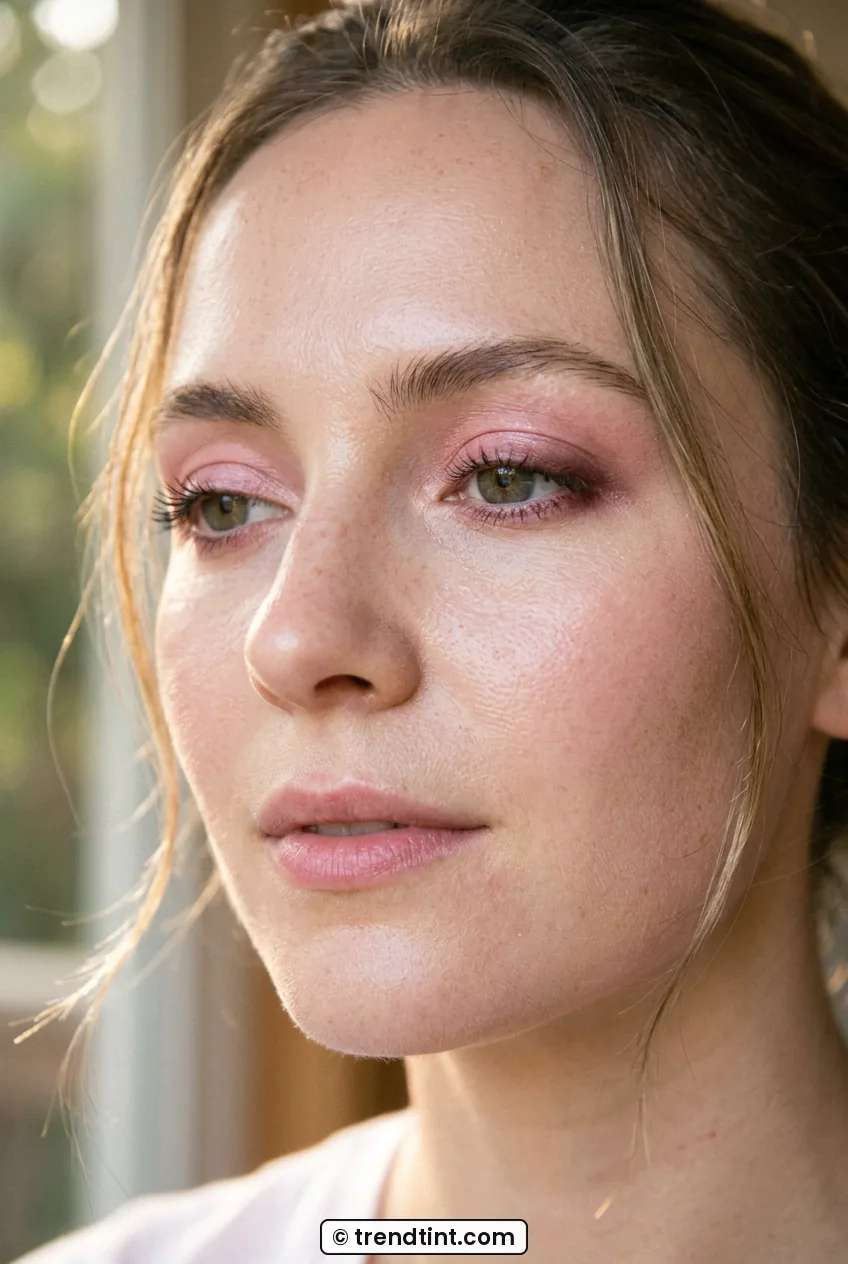
Look at her pink wash here, it is sheer at the edges and a little deeper right along the lashes. That graduation is why it photographs clean instead of chalky. I always point to that edge when friends ask why theirs looks harsh.
Why do some shades suit me and others make me look tired?
This one is part undertone, part placement. Warm rusts and peaches wake up my olive skin, while icy silver sits in my socket shadow and makes me look bruised. But I also learned that where I put a shade matters as much as the shade itself. A deep espresso in the outer corner lifts me. That same espresso smudged all along my lower lash line drags me down. My least favorite myth is that brown-eyed girls can only wear browns. A plummy mauve or a soft forest makes brown eyes glow, but only if you keep the darkest value tight to the lash line.
Why does one eye always look different?
Because faces are asymmetrical and eyes are sisters, not twins. My left hood is heavier, so I bring shadow about two millimeters higher on that side. It looks uneven with eyes closed. With eyes open it matches. I had to grieve the perfect closed-eye blend photo. My makeup is for open eyes now. I picked up that mindset shift from lessons eye makeup taught me and it still steadies me when I overthink.
And a quick note on trends that fight certain shapes. A super-thick, all-around black liner shrinks small or deep-set eyes in real life, even if it looks striking on camera. A very frosty inner corner on a prominent eye pushes it even more forward. None of that means you cannot wear them. It just means you adjust the volume. I wear a thin, well-smudged dark line instead of a marker line, and I get the mood without losing the shape.
What This Means for You
Okay, so how do you actually use all of this without turning your morning into a geometry exam? My approach now is simple and a little lazy, in the best way. I decide what my eyes do, I pick one focal point, and I let the rest stay quiet.
- If you are hooded or partially hooded like me, build color above the fold with eyes open, keep shimmer on the mobile lid only, and tightline instead of lining thick. A straight-across kitten flick beats a high swoop.
- If you are almond, you have the most room to play. A classic tapered liner, a soft elongated shadow, and lashes focused toward the outer third emphasize that natural taper without closing the eye.
- If you are round and want a little more lift, deepen and extend the outer corner horizontally, not upward into the temple. Smoke the lower lash line only on the outer half to keep the under-eye bright.
- If you are deep-set, keep the socket sheer and luminous in the center. Too much contour in the crease doubles the natural shadow and reads tired by 3 p.m.
- If you are monolid, embrace graphic placement. A blurred, smoked edge along the lashes and a vertical gradient looks stunning, and floating liner above where a crease would be photographs beautifully.
For color, here is what I reach for most. On brown eyes, I love bronze, warm taupe, plum, and olive. Those shades create contrast without screaming. On days I want that pink eye makeup vibe, I do a sheer pink wash with a deeper rose tight along the lashes and a clean, warm brown in the outer corner to anchor it. All-pink with no depth can read puffy on hooded lids, so that little anchor shade is my safety net.
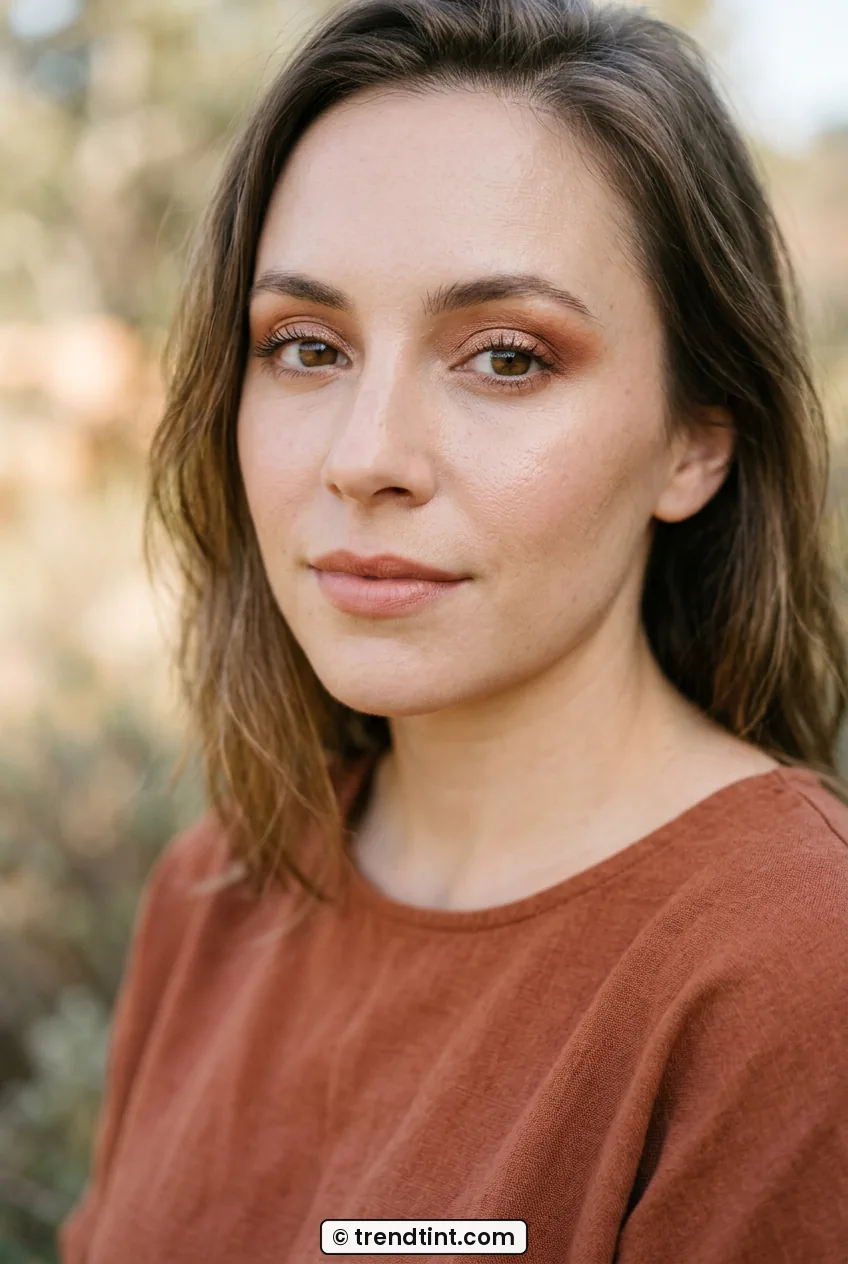
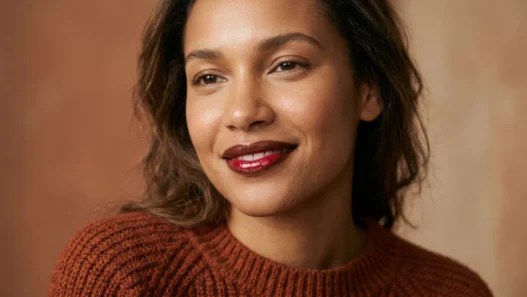
She is wearing the brown-eye bronze trick so well here, see how the warmth sits right at the lash line and fades soft? That is the contrast I mean. It makes the iris look deeper without a ton of product.
Simple eyeshadow routines work better for most shapes than the seven-pan blends we see online. My everyday look is three steps: a skin-tone matte to even things out, a mid-tone transition placed where it shows with eyes open, and depth pressed right into the lashes. That is it. When I want more drama I add a shimmer center or a small wing, I do not add three more mattes. You can find a similar low-stress approach in this honest long form eyeshadow looks guide which finally made me stop over-blending.
A couple of practical habits made the biggest difference for bigger-looking eyes. I curl lashes after shadow, not before, so I can see the real lift. I do mascara top first, then a whisper on the lower lashes, and I leave a little bare skin between lower mascara and any shadow to keep light under the eye. I map my brows a touch higher at the arch than I used to, which lifts the hood without any surgery-level concealer tricks. And I always check the look with a relaxed face, mouth closed, brows down. If I only check while smiling or raising my brows to blend, I am lying to myself about where things sit.
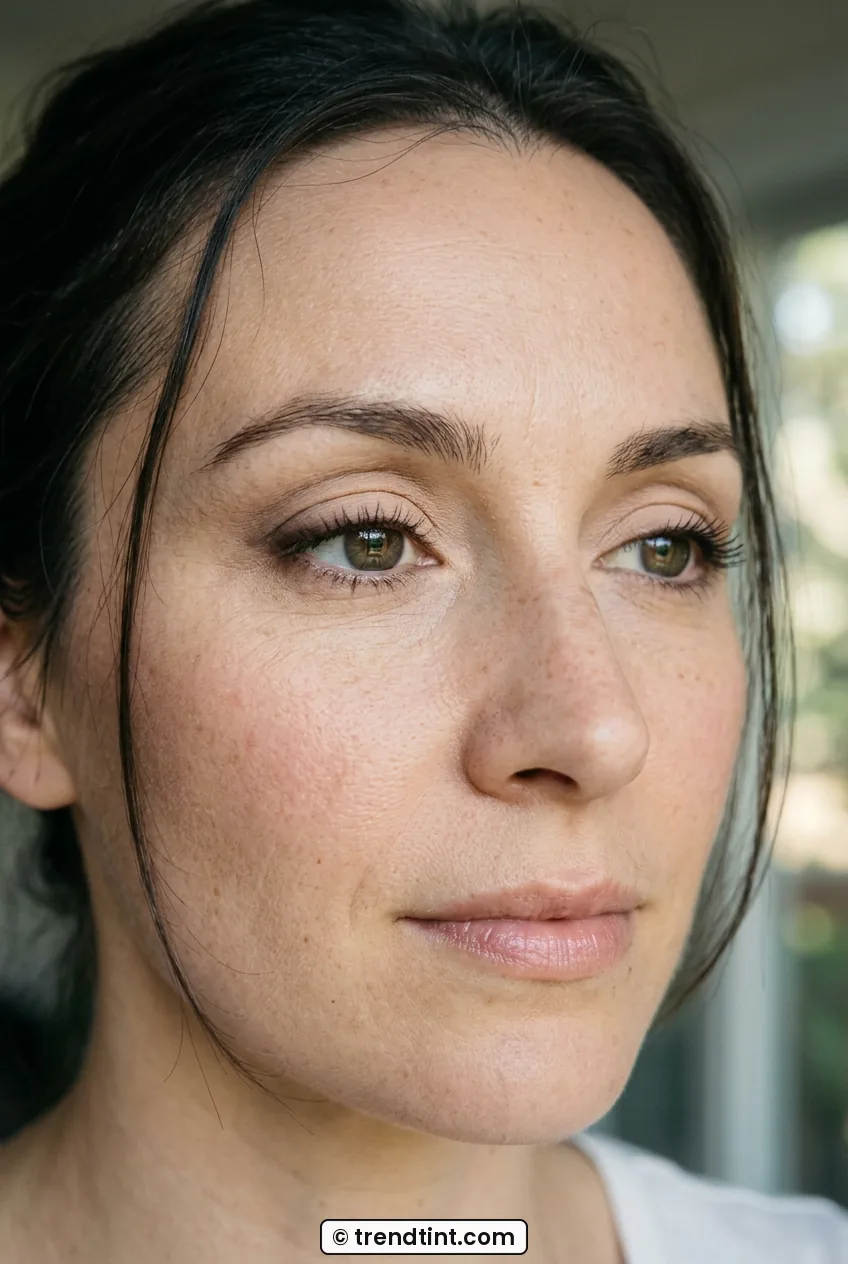
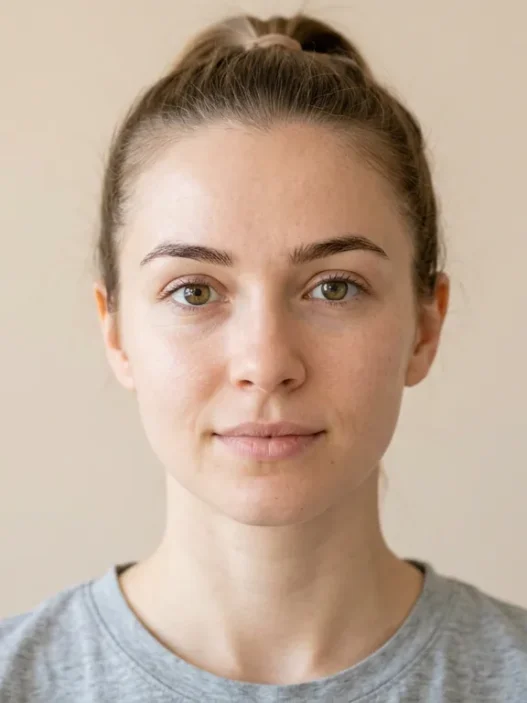
This is the everyday finish I live in now. Look at her skin and soft brown liner, nothing harsh, but her eyes still look defined. That is my goal most mornings, defined but still like myself.
One more thing I feel strongly about. Stop cutting your crease with concealer two shades too light if you have hooded lids. On camera it flashes white, in person it creases by lunch, and it fights the natural fold instead of working with it. A soft, well-placed matte transition in a shade close to your skin but slightly deeper gives you more lift with less product. You can learn more about eyeshadow primers for oily lids and why that thin base layer changes wear time if your shadow always slides by afternoon.
See the Placement in Real Time
What I Get Asked About Eye Shapes
Can your eye shape change over time?
Yes, and mine has. In my early twenties my lids looked classically almond. By my early thirties, with less sleep and a little loss of firmness, the outer halves got heavier and I tip into hooded territory when I am tired. Hormones, allergies, rubbing your eyes, and just time all shift how much lid shows. I recheck that neutral photo once a year.
What if I have hooded eyelids and liner always smudges?
You are my people. I tightline with a waterproof pencil, keep the upper line thin and set it with a matching shadow, and skip liner on the lower waterline during the day. Hooded lids press skin against liner, so creamy kohl alone will travel. Setting it and keeping shimmer away from the fold fixed about 80 percent of my smudging.
How do I make small or deep-set eyes look bigger without glitter?
Light in the right places, not all over. I use a satin skin-tone shade on the lid center, a soft matte a touch deeper through the outer corner, and a clean, lifted brow. Then I curl lashes well. That lifted lash line opens everything more than any white shimmer ever did for me.
Is kitten liner better than a big wing for my shape?
For most hooded, downturned, and close-set eyes, yes. A short, straight kitten flick extends the lash line without eating lid space or pulling the corner down. I save the dramatic swoop for evenings when I can take time to map it with eyes open. For daily wear, small and sharp wins.
At the end of the day, eye shapes are just a shortcut so you stop fighting your own face. Figure out your window, place color where it stays visible, and let the rest be easy. I still love playing with whimsy shadow and graphic lines on weekends, but on busy mornings I stick to what suits my structure. Tell me in the comments which side is your tricky eye, mine is the left, and what placement finally clicked for you.